Demolition Hammer vs Jackhammer: What’s the Real Difference?
Demolition hammers and jackhammers fit entirely different construction and demolition needs because of their power sources, working performance, and application scenarios, as well as their different usage prices and selection rationale.
Differences in Core Power Sources
The built-in motor of a demolition hammer, also called an electric breaker, is powered only by municipal electricity. It is a completely electric handheld instrument that doesn’t need any other equipment. After plugging in the power cord, workers may start and run it right away, making the pre-construction preparation much easier. It is appropriate for flexible and transient construction operations because of its independent power mode, which eliminates additional pipeline and equipment constraints.
The primary power source for a jackhammer, also known as a pneumatic breaker, is compressed air rather than electricity. It needs to be paired with a professional air compressor in order to produce continuous air pressure power because it cannot function on its own. In order to power the jackhammer’s interior impact structure, the air compressor transmits steady air pressure through air pipes. Because of this pneumatic working principle, it cannot be utilized independently like electric tools and must rely on auxiliary equipment.
Gap in Working Performance and Operation Limits
Demolition hammers are appropriate for traditional building demolition activities because of their steady but constrained impact power. Regular models have an impact energy between 15 and 45 J, while heavy-duty industrial models can reach up to 70 J, which completely satisfies the breaking requirements of typical cement and concrete structures. With balanced force and speed, its impact frequency is kept between 2000 and 3000 times per minute, guaranteeing seamless everyday restoration and small-scale civil engineering operations.
Jackhammers perform better in high-intensity breaking operations, particularly when dealing with thick layers of concrete and hard rock. A jackhammer’s impact force is far greater than a demolition hammer’s under the same volume and weight, and it has a much higher breaking efficiency for hard rock formations. During long-term working procedures, its impact frequency can increase to thousands of times per minute, ensuring more stable high-frequency operation without performance attenuation.
The continuous working capacity and heat dissipation limits of the two tools are likewise clearly different. The motor heat dissipation structure limits demolition hammers; in order to prevent motor burnout, standard models require brief cooling intervals after one to two hours of continuous high-load activity. Since jackhammers lack an integrated motor construction, overheating is not an issue. They are ideal for the high-intensity, continuous building needs of large-scale projects since they can operate continuously for extended periods of time.
Differentiated Application Scenarios and Cost Performance
Demolition hammers are mostly utilized in small-scale, dispersed building and remodeling projects that lack air compressor support. They are frequently used in home décor, including wall tile removal, cement layer chiseling, and wall grooves for electrical and water pipelines. They are also perfect for local road surface repairs and indoor partial dismantling because to their adaptable carrying and handy plug-and-play capabilities, which accommodate dispersed and mobile operation requirements.
Jackhammers are designed for particular industrial scenarios and high-intensity, long-term outdoor engineering. They are the recommended instruments for large-scale infrastructure destruction, hard rock breaking, and mining coal seam grooving. Pneumatic structures, on the other hand, are frequently utilized in railway ballast tamping and outdoor road restoration projects since they are safer and more stable in challenging conditions like high dust and humidity, minimizing the risks of electric tool burnout and leaking.
The comprehensive use costs and maintenance cycles of the two tools are entirely different. Demolition hammers are inexpensive to buy initially because they only need one device and don’t require other facilities, and their daily power consumption is little. However, during prolonged high-load operation, the integrated motor is a delicate component that needs regular repair. Although jackhammers are inexpensive per device, their pneumatic parts are long-lasting and require less maintenance over time. However, they also require more air compressors, which results in a large initial expenditure.
Scientific Selection Principles for Actual Construction
A demolition hammer is the most economical option for people involved in home décor, minor interior renovations, and sporadic temporary building. It can completely satisfy the requirements of small-scale dismantling and renovation work, has a low use threshold, flexible mobility, and doesn’t require complicated supporting equipment. It circumvents the needless equipment expenditure and laborious operation procedures associated with pneumatic instruments.
A jackhammer is better appropriate for engineering teams working on extensive outside infrastructure, mine operations, and long-term high-intensity breaking activity. Construction efficiency may be significantly increased by its powerful impact power, steady high-frequency operation, and limitless continuous working period. Its exceptional environmental adaptability in challenging working situations also guarantees construction safety and advancement for major projects.
In summary, demolition hammers and jackhammers are not inherently better. Matching the real building scenario is the fundamental component of choosing. Jackhammers are preferred for efficiency and durability in high-intensity, continuous, and harsh-environment engineering projects, while demolition hammers are preferred for flexibility and low cost in small, dispersed, and inside operations.
Demolition Hammer & Rotary Hammer for Sale
Demolition Hammer Rotary Hammer Blog
Angle
Diamond Blade

Welcome to call us
Contact Us to get quotation
Working Time: 8:00~17:00 Monday to Friday.
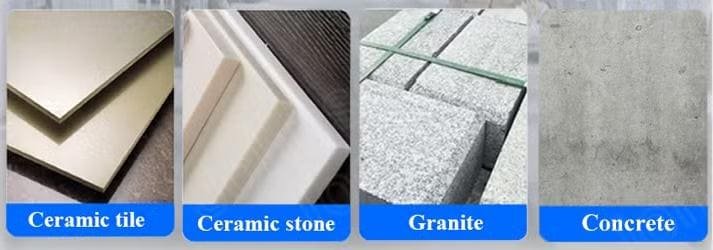
Applications:
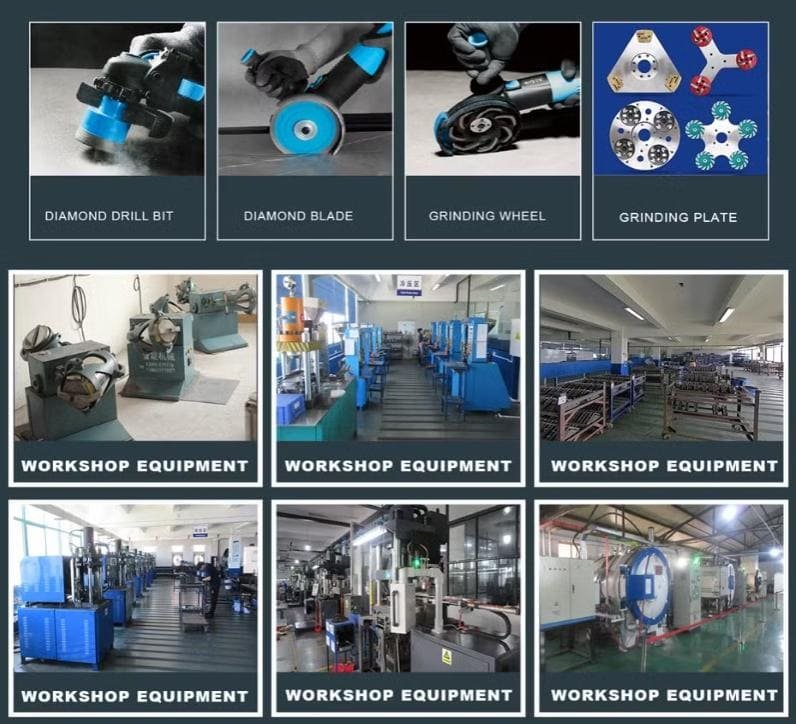
Factory:
FAQ
Welcome to call us
Contact Us to get quotation
Working Time: 8:00~17:00 Monday to Friday.