Demolition Hammer vs Rotary Hammer: Complete Comparison Guide
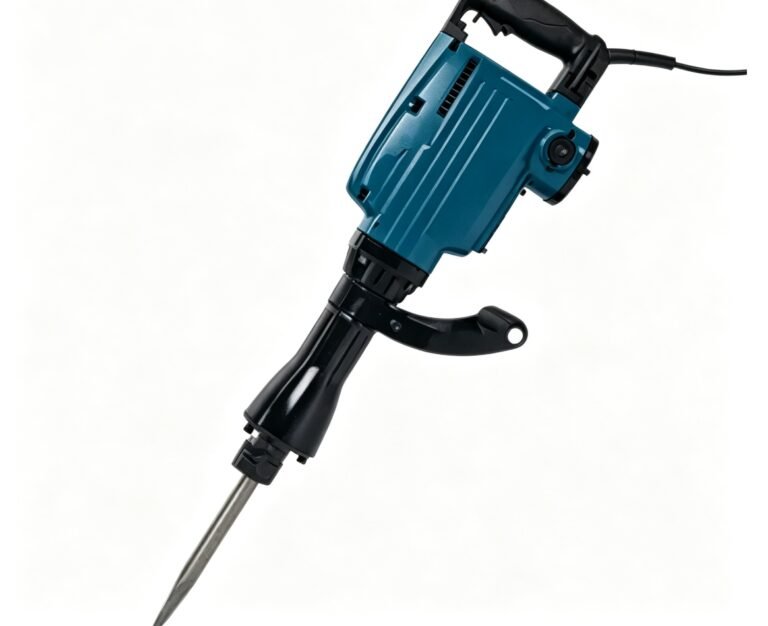
There are distinct differences between demolition hammers and rotary hammers in terms of working principles, performance, accessories, application scenarios, and usage costs. Demolition hammers concentrate solely on heavy breaking work, while rotary hammers support dual drilling and light chiseling functions.
Difference in Core Working Principles
Demolition Hammer vs Rotary Hammer: Complete Comparison Guide.The pure impact mechanical structure of a demolition hammer is intended just for shattering hard objects. With no rotating function at all, its internal motor merely powers the piston to produce concentrated straight chiseling force by high-frequency linear reciprocating action. The structural design completely eliminates rotating components and transforms all of the mechanical energy into a single, strong impact force. Thick concrete and sturdy building structures can be effectively crushed by an expert single-function structure since it maximizes instantaneous impact energy.
A rotary hammer, on the other hand, combines impact and rotation through a composite transmission mechanism. During operation, two sets of gear systems are simultaneously driven by its internal motor. While the other set drives the piston to generate consistent impact force, the first set forces the drill bit to revolve continually for cutting hard materials. The tool can effectively drill holes while overcoming the hardness of stone and concrete thanks to its special “rotating while hammering” compound movement, which solves the issue that regular drills are unable to pierce tough building materials.
The essential functional gap between the two instruments is determined by the underlying principle difference. The demolition hammer is a professional dismantling instrument because of its pure impact structure, which compromises drilling capabilities in order to achieve great breaking strength. The rotary hammer’s composite structure emphasizes flexible and multipurpose operation while striking a balance between cutting and impacting performance. Their disparate performance limits and application orientations in real building stem from this fundamental mechanical difference.
Gap in Core Working Performances
Compared to rotary hammers, demolition hammers are positioned for heavy-load breaking and have significantly higher total power and impact parameters. Strong power assistance for high-intensity disassembly is provided by their mainstream power, which starts above 1500W, and heavy industrial versions, which can go up to 3000W. Thick concrete layers and pavement constructions can be severely damaged by impact energy that steadily ranges from 20J to 60J, with the most powerful heavy-duty models capable of exceeding 70J. The majority of types require two-hand stable operation, fully adaptable to long-term heavy construction, with a total machine weight of 8 to 30 kilos.
For precise and adaptable work, rotary hammers are lightweight, multipurpose instruments with minimal power and impact energy. The majority of home and small engineering models are centered in the 800W to 1200W range, while their conventional power is kept between 500W and 1200W. Only a few dual-mode versions with chiseling functions can achieve 10J, and the impact energy ranges from 1.5J to 5J. Workers’ long-term weariness is significantly reduced since the body weight is kept between two and five kilograms and is light enough to be held and operated with one hand.
Additionally, there is a noticeable efficiency difference between the two instruments in various building activities. With a typical efficiency of 0.3 to 0.5 square meters per hour for 5-centimeter deep concrete chiseling, demolition hammers are excellent at large-area breaking and are appropriate for batch dismantling projects. A typical 12mm hole in C30 concrete can be drilled with a rotary hammer in roughly 10 seconds. With no overlapping competition range in real construction, their individual efficiency benefits render them indispensable in pure breaking and accurate drilling scenarios.
Differences in Appearance, Accessories, Scenarios and Costs
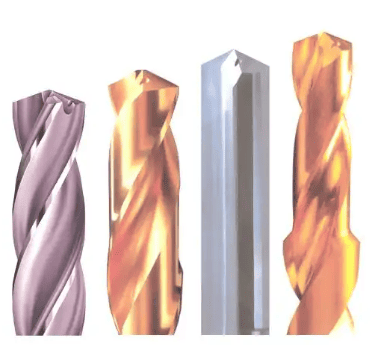
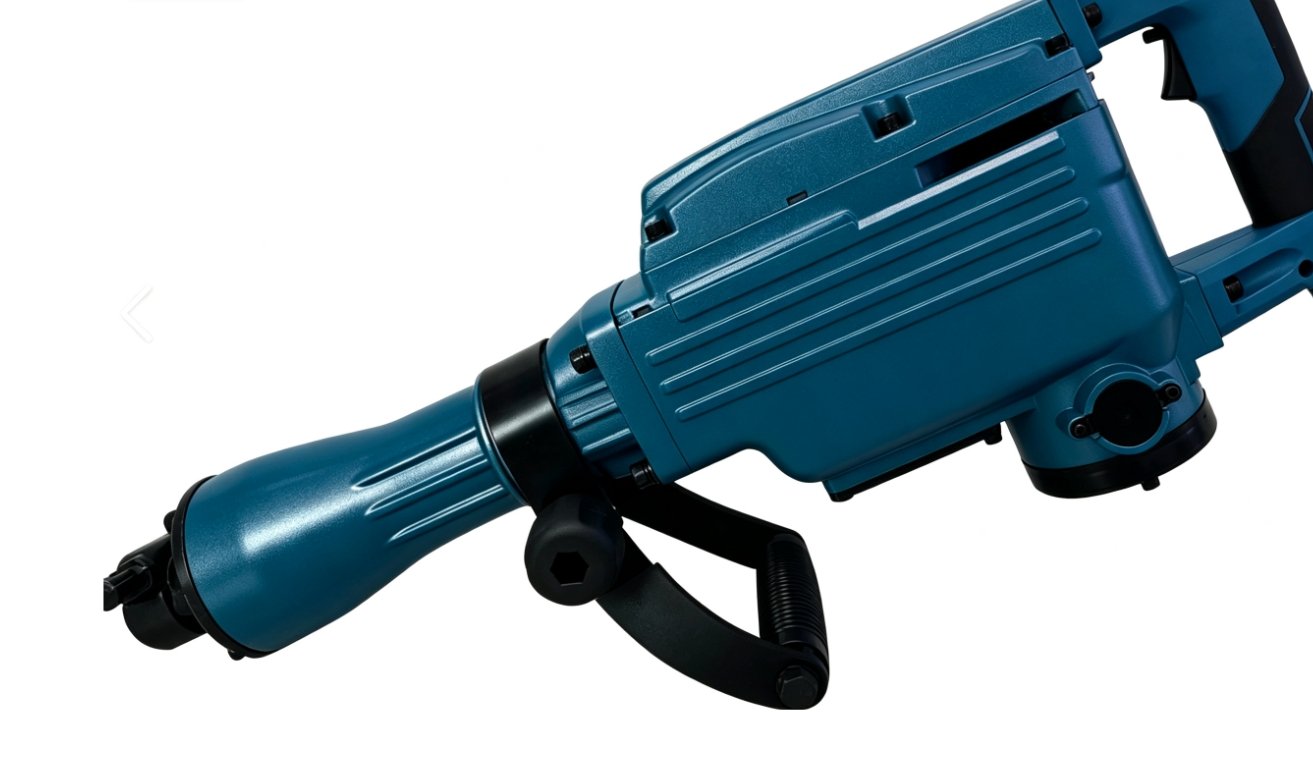
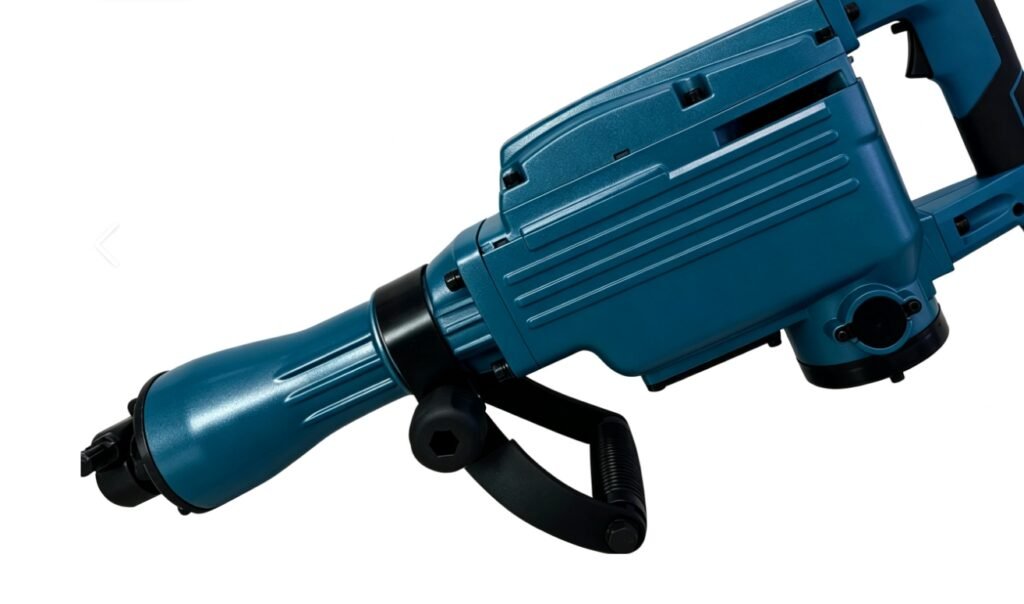
In keeping with their various functional placements, demolition hammers and rotary hammers differ noticeably in appearance and auxiliary accessories. In order to withstand severe vibration during breaking, demolition hammers have a massive, thick body with a twin shock-absorbing auxiliary handle. They have flat or solid-pointed chisels without spiral threads, and the internal lock system merely restricts axial movement to totally stop rotation, guaranteeing that all impact force acts steadily on the breaking surface. The body of a rotary hammer is lightweight, portable, and has a flexible grip. They use standard SDS quick-change chucks and drill bits with spiral chip removal grooves, which enable sliding rotation during drilling to swiftly clear holes of dust and debris.
Based on functional qualities, their suitable building situations are precisely categorized. Demolition hammers are only used for continuous, high-intensity deconstruction tasks, such as large-scale old floor chiseling, concrete pavement smashing, and wall demolition. For single pure breaking activities without the need for drilling, they are the ideal option. For hybrid operating scenarios, such as punching holes for air conditioners and equipment supports and grooving walls for water and power pipelines, rotary hammers are appropriate since they require both drilling and light chiseling. Additionally, its flexible body adjusts to cramped interior areas where heavy tools are unable to function well.
Additionally, there are significant differences between the two tools in terms of sales price, maintenance difficulties, and service life. Because their design emphasizes reliable long-term rotational drilling with little component wear, rotary hammers offer a longer service life with the same build quality. Demolition hammers require frequent inspection and maintenance to prevent failure since they operate under long-term high-load impact circumstances, which accelerates the consumption of their worn parts. Rotary hammers of the same brand and grade only cost between one-third and half as much as demolition hammers. While regular household users simply need a multipurpose rotary hammer with impact mode to cover all daily renovation demands without purchasing a dedicated demolition hammer, professional construction teams typically equip both equipment for distinct tasks.
Demolition Hammer & Rotary Hammer for Sale
Demolition Hammer Rotary Hammer Blog
Angle
Diamond Blade

Welcome to call us
Contact Us to get quotation
Working Time: 8:00~17:00 Monday to Friday.
Applications:
Factory:
FAQ
Welcome to call us
Contact Us to get quotation
Working Time: 8:00~17:00 Monday to Friday.
Diamond Blade:
Blogs:
You May also Interest in other topics:
EV Charger Gun wollastonite grinding mill for refractory material offset-printer/aluminum-printing-machine Paddle Mixer