Electric vs Pneumatic Demolition Hammer for Construction Sites
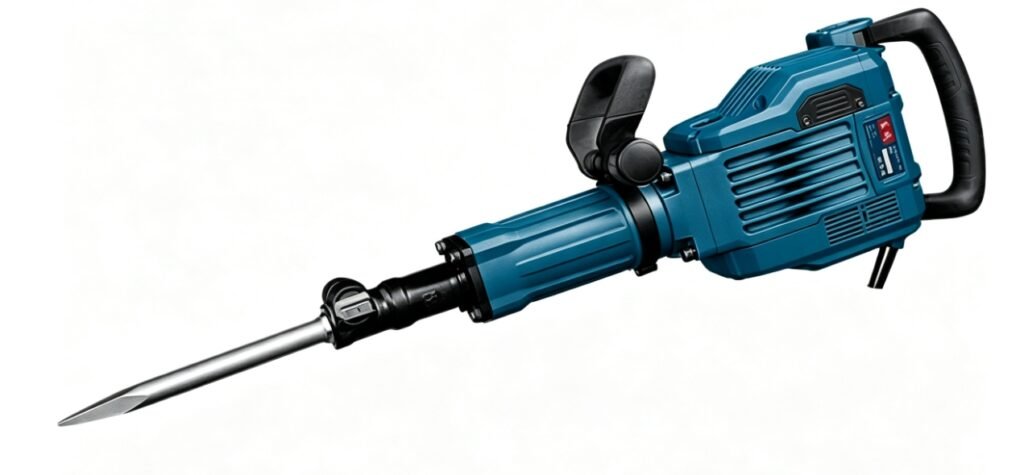
Pneumatic Demolition Hammers are better suited for heavy-duty, high-risk, and lengthy engineering tasks, while electric models are better suited for flexible, sporadic urban construction due to fundamental differences in power systems, working performance, site adaptability, and operating costs.
Differences in Core Power Systems
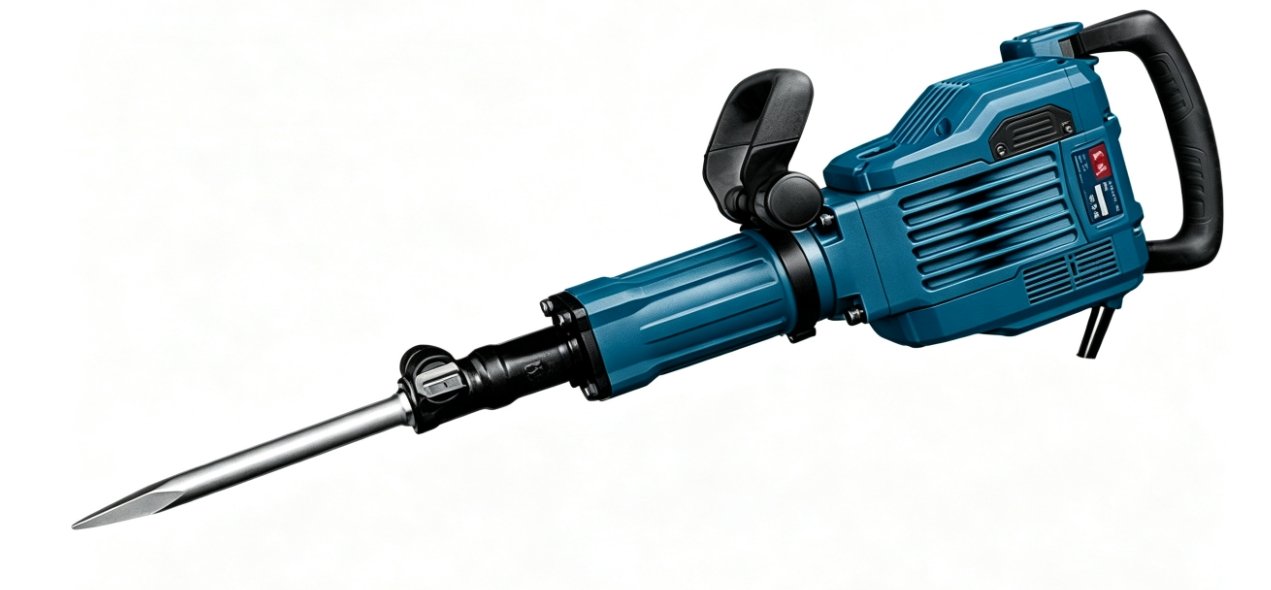
Electric vs Pneumatic Demolition Hammer for Construction Sites.Electric demolition hammers use a straightforward, self-sufficient electric power supply system that runs entirely on municipal energy. In order to produce linear impact force and achieve stable breaking output, the integrated motor powers the crankshaft and connecting rod construction. Self-sufficiency is the main benefit of this power mode since it eliminates the need for complicated auxiliary systems or extra supporting equipment. After plugging in the power cord, workers may begin construction right away, which makes on-site preparation much easier and accommodates quick temporary construction arrangements.
Pneumatic demolition hammers, sometimes referred to as air hammers, are powered solely by compressed air and are unable to operate on construction sites on their own. To transform electric energy into high-pressure air power, they need to be paired with a professional air compressor. To supply compressed air to the tool, a full air pipeline arrangement is needed. The availability of the tool is entirely dependent on the regular functioning of air compression equipment and a smooth pipeline architecture since the entire working system constitutes a complete set of air supply and operation chain.
The fundamental differences in operating thresholds and site preparation challenges are caused by the various power structures. Low access obstacles and flexible deployment make electric demolition hammers ideal for quick construction changeover in intricate urban environments. Although pneumatic demolition hammers require more pre-construction preparatory work and total system deployment in advance, their pure pneumatic driving mode eliminates the chance of electrical failure, offering significant safety benefits for unusual building conditions.
Gap in Core Working Performance
The impact energy of electric demolition hammers is consistent and stable, making them appropriate for the majority of traditional construction breaking applications. Regular electric models have impact energies between 15 and 45 J, while heavy-duty industrial models can reach up to 70 J, which completely satisfies the breaking requirements of typical concrete and building structures. Electric hammers can only operate continuously for one to two hours before requiring a brief cooling break due to the motor heat dissipation limit. Construction stability will be impacted by motor heat attenuation and power decline brought on by prolonged, continuous high-load operation.
Under the same volume and weight constraints, pneumatic demolition hammers exhibit exceptional performance advantages in impact strength and continuous working capacity. The majority of pneumatic variants are particularly useful for crushing extremely hard rock and high-strength concrete since they can consistently produce impact energy beyond 30J and have a stronger instantaneous breaking force than electric hammers of the same grade. Pneumatic tools don’t produce heat or experience thermal attenuation when in use because they don’t have any integrated motor components. They can adapt to high-intensity batch demolition activities and work continuously throughout the entire day without experiencing performance loss.
Additionally, the body weight and operating strain of the two instruments differ noticeably. Due to their integrated motor and electrical components, electric demolition hammers are roughly 20% heavier than pneumatic variants under the same power configuration. The overall body weight of pneumatic hammers is reduced by almost 20% due to their more streamlined and compact structural design. The lightweight body enhances construction controllability in high-intensity continuous work, reduces handheld operating pressure, and relieves worker fatigue during extended operation.
Site Adaptability, Cost and Maintenance Differences
With a suitable power source, electric demolition hammers are very versatile for interior design, urban reconstruction, and traditional dispersed construction sites. They work effectively in situations requiring sporadic operation, like small-area ground breaking and wall grooving. Power cables are simpler to organize and store on urban building sites than pneumatic hoses, and they don’t take up a lot of site space or obstruct the movement of workers and equipment. They are the standard instrument for modest civil engineering projects and everyday urban rehabilitation due to their adaptable deployment properties.
Only heavy-duty, high-risk unique construction situations, such as mine mining, ultra-hard rock crushing, and combustible and explosive construction sites, are suitable for pneumatic demolition hammers. The pure pneumatic structure satisfies the safety requirements of high-risk working situations since it produces no electric sparks while in use, totally removing the possibility of electric leakage and ignite. However, the long-term heavy-load operation requirements of large-scale infrastructure and mine engineering are well matched by their powerful impact force and uninterrupted functioning capability.
There is a noticeable difference between the two instruments in terms of daily maintenance difficulties and lifetime use expense. Since only one instrument needs to be bought and no other equipment is needed, electric demolition hammers have a low initial cost. The built-in motor is a delicate component that wears down quickly under prolonged high-load operation, resulting in somewhat high failure risks in heavy use. However, daily maintenance is straightforward and mostly consists of replacing the chisel on a regular basis. Pneumatic hammers, on the other hand, necessitate the installation of air pipelines and the purchase of extra air compressors, which raises the initial outlay. Pneumatic components have consistent performance and a longer service life during long-term high-intensity operation, but daily use need routine drill bit replacement and lubricant maintenance with slightly higher professional maintenance thresholds.
Demolition Hammer & Rotary Hammer for Sale
Demolition Hammer Rotary Hammer Blog
Angle
Diamond Blade

Welcome to call us
Contact Us to get quotation
Working Time: 8:00~17:00 Monday to Friday.
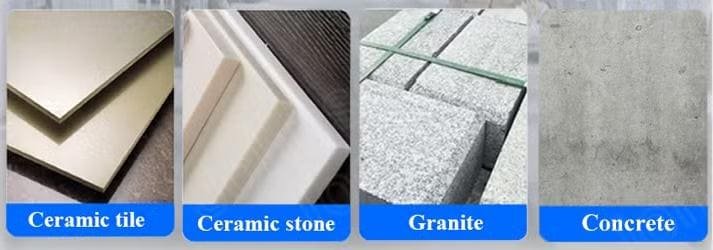
Applications:
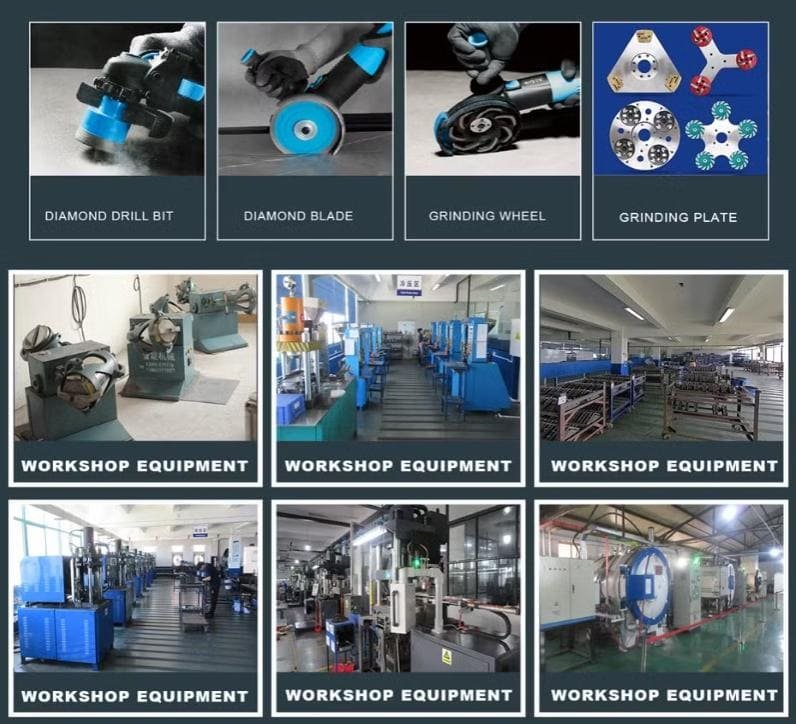
Factory:
FAQ
Welcome to call us
Contact Us to get quotation
Working Time: 8:00~17:00 Monday to Friday.