What are the different types of demolition hammers?
What are the different types of demolition hammers?
Demolition hammers are categorized into multiple distinct types based on weight and power grade, power source, functional design, and internal lubrication system, with each type tailored for specific light, medium, and heavy-duty breaking scenarios to match different construction and renovation demands perfectly.
Demolition Hammer Types by Power and Weight Grade
Lightweight demolition hammers feature a power output ranging from 700W to 900W and a compact body weight of 3kg to 5kg, lightweight enough for stable single-hand operation. These small-scale hammers deliver moderate impact force without excessive vibration or heavy body burden, making them exclusively designed for light indoor renovation tasks. Workers rely on lightweight models to remove old floor and wall tiles, carve shallow grooves for water and electrical pipelines, and strip thin wall plaster layers. They cannot handle thick solid concrete breaking, but their high flexibility and easy maneuverability make them the most practical tool for daily household and small renovation projects.
Medium-grade demolition hammers cover a power range of 1000W to 1500W with a body weight between 9kg and 12kg, serving as the mainstream workhorse for most engineering construction sites. Balancing sufficient impact power and controllable weight, these hammers can break through concrete walls up to 20 centimeters thick steadily and efficiently. They are widely used for conventional wall dismantling, partial concrete structure removal, and routine municipal road maintenance. Unlike lightweight models with insufficient power or heavy models that are hard to carry, medium demolition hammers adapt to most common medium-intensity breaking tasks, achieving the best balance of construction efficiency and operational convenience.
Heavy-duty demolition hammers are industrial-grade tools with a rated power above 1800W and a total weight exceeding 15kg, delivering ultra-high impact energy over 60J per strike. Built with thickened cylinders and reinforced internal transmission structures, these heavy machines are engineered to withstand continuous high-load operation. They are specially applied for harsh heavy-duty scenarios, including road foundation breaking, large-scale thick concrete structure demolition, and rigid layer excavation. Although bulky and requiring two-handed stable operation, their powerful striking force drastically improves efficiency for large-area heavy demolition work that lightweight and medium hammers cannot complete.
Demolition Hammer Types by Power Source
Cordless lithium-ion demolition hammers are powered by high-capacity rechargeable batteries, completely breaking free from the constraints of power cords and fixed power sources. This portable design allows flexible movement and operation in remote outdoor sites, high-altitude areas, and temporary construction zones without mains power access. While their continuous runtime is limited by battery power and peak impact power is slightly lower than corded models, their outstanding mobility makes them ideal for scattered, short-term, and no-power field breaking operations, filling the operational gap of corded hammers in off-grid scenarios.
Demolition Hammer Types by Special Functional Design
Variable speed frequency conversion demolition hammers are equipped with 2 to 3 adjustable impact frequency gears, allowing operators to switch output intensity according to the hardness of different working materials. When dealing with soft plaster and thin tile layers, low-frequency gear reduces redundant impact and vibration loss; when breaking hard concrete, high-frequency gear boosts breaking efficiency. This adaptive adjustment effectively avoids mechanical resonance and unnecessary component wear, extending the overall service life of the machine while adapting to diverse construction materials.
Dust extraction demolition hammers come with built-in dust collection boxes and matching dust suction structures, which can capture most flying silica dust and concrete debris during operation. Traditional demolition work produces massive harmful dust that pollutes indoor environments and endangers operators’ respiratory health, while dust-collecting models greatly reduce dust diffusion. They are specially suitable for indoor home renovation, closed-space construction, and other scenarios with strict environmental cleanliness requirements, realizing low-pollution and healthy construction.
Low-temperature dedicated demolition hammers adopt improved internal structural designs and special low-temperature resistant lubricants and accessories, enabling normal startup and stable operation at temperatures as low as -15°C. Ordinary electric hammers are prone to difficult startup, lubricant solidification, and reduced impact power in cold winter environments, while low-temperature models effectively solve these problems. They are essential professional tools for outdoor construction projects in northern low-temperature winter conditions.
High vibration reduction demolition hammers are fitted with multi-stage buffer shock absorption structures on handles and internal impact components, which can offset more than 70% of the vibration transmitted to the operator’s hands. Long-term use of ordinary hammers easily causes hand numbness, wrist soreness and chronic joint fatigue, while high-damping models greatly reduce vibration harm. This functional design significantly improves comfort during long-hour continuous operation and lowers the risk of occupational strain injuries for professional construction workers.
Demolition Hammer Types by Internal Lubrication Method
Oil-lubricated demolition hammers are equipped with independent built-in fuel tanks, adopting circulating oil lubrication for internal gears, pistons and transmission components. After a single oil filling, the machine can work continuously for dozens of hours without frequent maintenance. The circulating oil system provides uniform and durable lubrication and heat dissipation, effectively reducing internal friction and high-temperature wear. This lubrication method is mostly adopted by large-tonnage heavy-duty demolition hammers that require long-term high-load operation, featuring long maintenance cycles and stable long-term performance.
Grease-lubricated demolition hammers rely on regular manual grease injection to maintain internal component lubrication, with a simpler internal structural design and lower daily maintenance difficulty. This lubrication form is the mainstream configuration for most small and medium-power demolition hammers used in daily renovation and conventional engineering projects. Although grease needs regular replenishment and replacement to avoid dry friction and component wear, its low cost and convenient maintenance make it highly cost-effective for daily light and medium-intensity breaking work.
Supplementary Q&A
Q: Which type of demolition hammer is best for whole-house indoor renovation?
A: A medium-grade corded variable-speed high-vibration-reduction demolition hammer is the most suitable option. It balances sufficient power for wall and tile removal and flexible operation in narrow spaces, with adjustable gears and shock absorption to adapt to various indoor materials and reduce long-work fatigue.
Q: Are lithium cordless demolition hammers capable of heavy concrete breaking?
A: No. Cordless models are designed for light and medium scattered tasks. Their battery power limits peak impact force and continuous working time, so they cannot replace corded heavy-duty hammers for large-area thick concrete demolition.
Q: What is the difference in maintenance between oil-lubricated and grease-lubricated hammers?
A: Oil-lubricated hammers have longer maintenance intervals and suit long continuous work, while grease-lubricated models require regular grease replacement but have simpler and cheaper daily maintenance, ideal for intermittent daily renovation work.
Final Verdict
Demolition hammers are scientifically classified through four core dimensions, covering power grade, power source, special functions and lubrication modes. Light, medium and heavy grades correspond to light renovation, conventional engineering and heavy industrial scenarios respectively; corded and cordless types adapt to fixed on-site and mobile off-grid work; diverse functional models meet special demands of dust-free construction, low-temperature operation and long-hour comfortable work; oil and grease lubrication systems match heavy long-load and conventional intermittent use. Selecting the correct demolition hammer type based on actual working conditions can maximize construction efficiency, reduce equipment wear and lower operational safety risks.
Demolition Hammer & Rotary Hammer for Sale
Demolition Hammer Rotary Hammer Blog
Angle
Diamond Blade

Welcome to call us
Contact Us to get quotation
Working Time: 8:00~17:00 Monday to Friday.
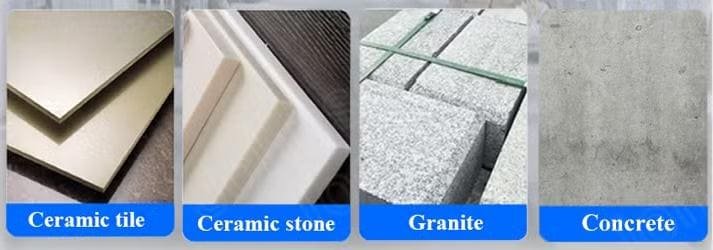
Applications:
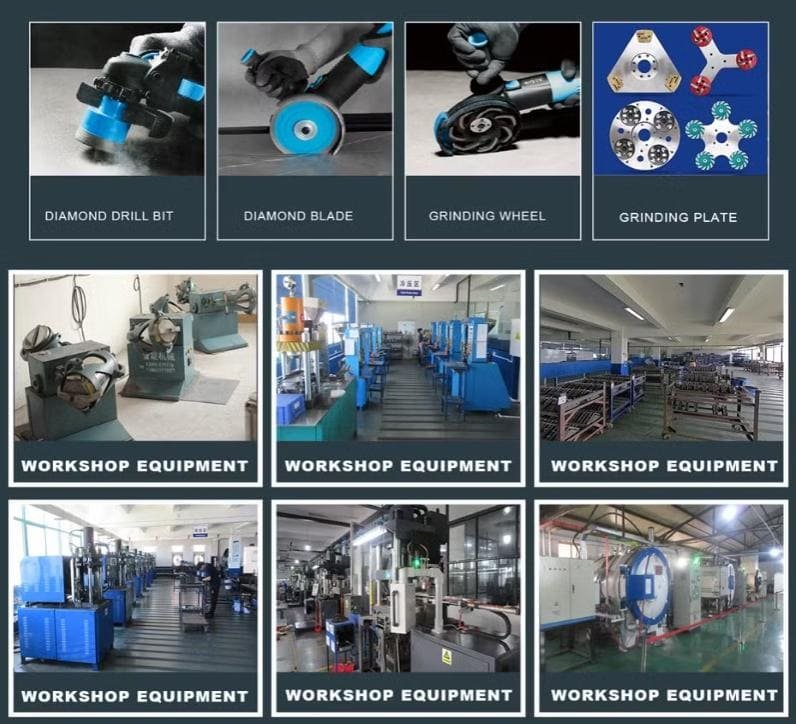
Factory:
FAQ
Welcome to call us
Contact Us to get quotation
Working Time: 8:00~17:00 Monday to Friday.