Will a Diamond Blade Cut Stone?
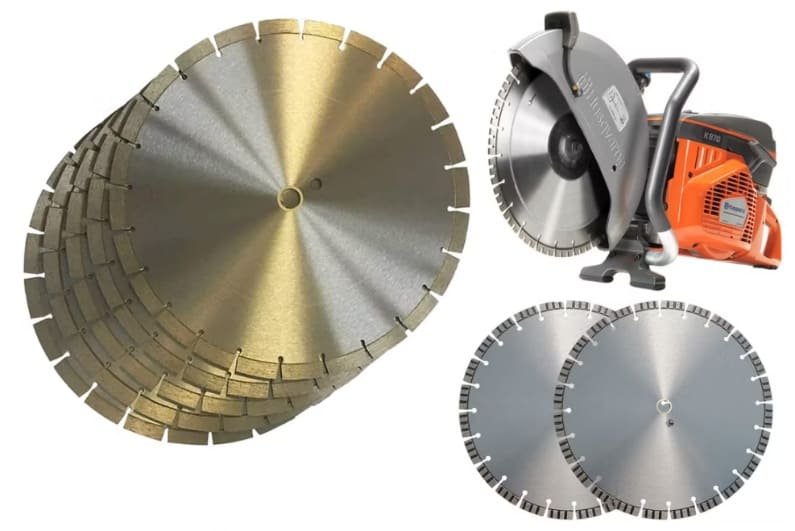
Can a Diamond Blade Cut Stone? Absolutely, diamond blades are specifically designed to cut stone, taking advantage of diamond’s extraordinary hardness and wear resistance. However, their efficiency is dependent on blade quality, tooth design, the type of stone, and operating conditions. Generally, diamond blades excel at cutting softer to medium-hardness stones like marble, limestone, and sandstone, and can handle harder stones like granite with appropriate blade selection and technique.
The Unbeatable Hardness: Why Diamonds Cut Stone
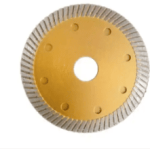
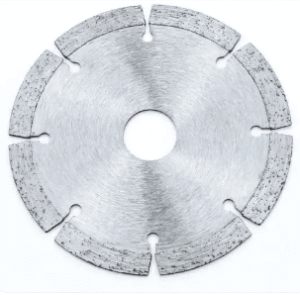
The unrivaled hardness of diamond, the hardest natural substance known, is at the heart of a diamond blade’s performance. Diamond blades don’t use large gemstones; instead, they embed countless tiny, industrial-grade synthetic diamond crystals within a metal alloy matrix (the “bond” or “segment”) along the blade’s edge. As the blade spins against the stone surface, these incredibly hard diamond particles act like microscopic chisels. They scratch, fracture, and grind away the stone material. The surrounding metal bond gradually wears down, constantly exposing fresh, sharp diamond crystals to maintain cutting efficiency.This unique combination of extreme hardness embedded within a wearing matrix is what allows diamond blades to effectively cut through stone, concrete, ceramics, and other tough materials where traditional steel blades would instantly blunt and fail. The bond composition is critical – it must be hard enough to hold the diamonds securely, yet wear at a controlled rate to ensure continuous diamond exposure without losing the diamonds prematurely.
Where Diamond Blades Shine: Applications in Stone Cutting
Diamond blades are the undisputed champions in modern stone fabrication and construction. Their primary application is precisely cutting natural stone slabs (like granite, marble, limestone, sandstone, slate) and engineered stone (quartz composites) for countertops, tiles, cladding, and monuments. They are equally vital in construction for cutting concrete, asphalt, bricks, and blocks. Beyond stone, their prowess extends to cutting extremely hard, brittle materials like ceramic tiles, porcelain, glass, and even certain advanced composite materials. In the quarrying industry, massive diamond wire saws or large-diameter diamond circular saws are used to extract huge blocks (called “quarry blocks”) directly from the bedrock. Within fabrication shops, smaller, more precise diamond blades mounted on bridge saws, tile saws, or hand-held angle grinders are used for sizing, shaping, profiling, and creating intricate details. This widespread adoption stems from their unique ability to deliver relatively fast, clean cuts in materials that quickly destroy conventional cutting tools, significantly boosting productivity and precision in stone-related industries.
Factors Dictating Cutting Success: It’s Not Just the Blade
While diamond blades inherently cut stone, the quality and efficiency of the cut depend heavily on several interconnected factors. First and foremost is the blade quality itself. High-quality blades use premium synthetic diamonds with consistent strength and size, combined with a precisely engineered bond matrix tailored for specific materials. Cheap blades often use lower-grade diamonds and inconsistent bonds, leading to rapid wear, poor cutting performance, potential chipping of the stone edge, and even dangerous blade failure. Tooth (Segment) Design is equally crucial. The pattern of the segments, the width of the cut (kerf), the gullet size (space between segments for debris removal), and even the shape of the segment (continuous rim, turbo rim, segmented) dramatically affect cutting speed, smoothness, cooling, and blade life. For instance, a segmented blade cuts faster in hard materials but leaves a rougher edge, while a continuous rim blade gives a smoother cut but is slower and better suited for delicate materials like tile. The Stone’s Properties are paramount. Hardness is the obvious factor – cutting dense granite requires a vastly different blade (with a harder bond, tougher diamonds) than soft marble or sandstone. However, mineral composition, abrasiveness, and internal structure (grain, fractures, inclusions) also play huge roles. Highly abrasive stones wear down the bond faster, while stones with varying hardness or fractures can cause uneven cutting and blade chatter. Finally, Operating Conditions are critical. Adequate water cooling is essential for most stone cutting to lubricate, reduce dangerous dust (silica), and prevent the blade and stone from overheating, which damages both. Using the correct blade RPM (Revolutions Per Minute) and applying the right feed pressure are vital – forcing the blade too fast causes overheating and premature diamond fracture, while too slow feed glazes the blade (overheats the bond, smoothing it over the diamonds). Using a blade designed for wet cutting without water is a surefire way to ruin it quickly.
Optimizing Stone Cutting: The Power of Thin Diamond Blades
A significant advancement in stone cutting efficiency is the diamond thin-kerf circular blade. These blades are engineered with a narrower cutting width achieved by reducing both the thickness of the metal core (body) and the width of the diamond segments. This seemingly simple change delivers powerful benefits. The most significant is a dramatic increase in slab yield from expensive raw stone blocks. By removing less material as dust (the kerf loss), more usable slabs are produced from each block, directly lowering material costs per square meter. This is especially critical for high-value imported stone. Secondly, the reduced mass of the thinner core and segments means less power is required to spin the blade, leading to substantial electricity savings. Thirdly, the smaller segments require less diamond and metal raw material, lowering blade manufacturing costs. However, the thinner core inherently has less rigidity. To compensate and maintain cutting performance, enhancing the sharpness of the diamond segments becomes paramount. This involves five key elements: using higher-strength diamonds (often 1-2kg stronger than standard), increasing the proportion of coarser diamond grit (e.g., 40/50 mesh to >60%), reducing diamond concentration (typically below 25%), optimizing the bond matrix for easier exposure of diamonds using low-temperature, easy-to-break-in alloys, and shortening the segment length (e.g., from 24mm to 21mm) to reduce friction and required cutting force.
Operating Thin Blades: Precision and Protection
Successfully using thin diamond blades demands careful operation and specific strategies to overcome their inherent lower rigidity. Initial Cutting Strategy: Starting a cut requires extra care. Begin with a slow feed rate and shallow depth (around 30mm) to establish a straight, clean kerf before gradually increasing both speed and depth. Staged Cutting for Wide Slabs: Cutting very wide slabs (e.g., 800mm or 900mm) shouldn’t be attempted in one pass with the largest blade. Instead, first cut to a moderate depth (e.g., 600mm) with a smaller blade (e.g., 1600mm diameter). Then switch to the larger blade (e.g., 2000mm or 2200mm) to complete the cut. When switching, meticulous alignment with the existing kerf is essential to avoid blade binding and damage. Adapting to Stone Hardness: Always adjust feed rate and depth based on the stone. Harder stones require shallower cuts and faster feed rates (“shallow cut, fast feed”) to avoid excessive blade pressure and heat buildup. For example, cutting hard Indian Red granite might use an 8mm depth per pass and a feed speed around 2.6 meters per minute. Fixed Direction Cutting: Maintaining a consistent cutting direction (e.g., always clockwise) helps stabilize the blade and promotes even wear, significantly enhancing its lifespan and reliability. Crucial Power Management – Current Limiting: The reduced rigidity of thin blades makes them highly susceptible to damage from sudden jams (“bite” or “pinch”). An Amperage (Current) Limiting Controller (like the LJA80 mentioned) is essential protection. It continuously monitors the motor’s current draw. If the current spikes dangerously (indicating the blade is binding or overloaded), the controller instantly reduces power or stops the motor within milliseconds, preventing catastrophic blade failure and protecting the operator. This is non-negotiable for safe and economical thin blade operation.
Understanding Blade Specifications: Beyond Diamonds
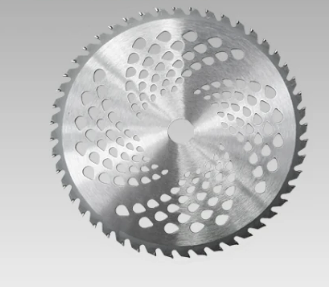
While diamond blades dominate hard stone cutting, understanding related blade types, particularly Tungsten Carbide Tipped (TCT) blades, is valuable for context, especially when working with softer stone varieties or wood/plastic often present on job sites. Carbide Types: TCT blades use teeth made from cemented tungsten carbide. The two main types are YG (Tungsten-Cobalt) and YT (Tungsten-Titanium-Cobalt). YG types, known for better impact resistance (crucial for the intermittent cutting in wood/soft materials), dominate woodworking (common grades YG8 to YG15, where the number indicates cobalt percentage – higher cobalt increases toughness but reduces hardness). Blade Body: The steel core must provide the right balance of strength, flexibility (to dampen vibration), and flatness. High-quality cores are tensioned for stability. Diameter, Teeth, Thickness: Blade diameter must match the saw’s capacity and the material thickness. Smaller diameters mean lower cutting speeds; larger diameters require more powerful saws. Tooth count affects finish and speed: more teeth = smoother cut but slower; fewer teeth = faster cut but rougher. Thickness affects kerf width, stability, and power requirements. Tooth Geometry & Angles: This is critical for performance. Common profiles include Alternate Top Bevel (ATB – good general wood cutting), Flat Top Grind (FTG – for ripping lumber), Combination (ATBR – mix of ATB and raker teeth), and specialized profiles like Triple Chip Grind (TCG – excellent for hard materials like laminates, plastics, and softer stone/aluminum). Angles (hook angle, top bevel angle) dramatically influence cutting aggression, smoothness, and material handling. Arbor Hole: Must precisely match the saw’s arbor (mandrel) size for safe, vibration-free operation. Larger blades (>250mm) benefit from larger bore sizes (e.g., 30mm) for greater stability.
Using Blades Safely and Effectively: Essential Practices
Proper blade handling and operation are fundamental for safety, blade life, and cut quality. Pre-Operation: Always inspect the blade carefully for cracks, missing segments (on diamond blades), damaged carbide tips (on TCT), or excessive warping. Ensure it’s clean and free of pitch or debris. Verify it’s suitable for the material and machine (correct diameter, arbor size, RPM rating). Wear essential PPE: safety glasses, hearing protection, respirator (especially for silica dust from stone), and gloves. Secure the workpiece firmly. Operation: Start the saw and let the blade reach full speed before contacting the material. Feed the material steadily and smoothly – never force it. Listen to the motor sound; bogging down means feed is too fast or depth too deep. For dry cutting (only if the blade is explicitly rated for it!), make shorter cuts and allow cooling time. Wet Cutting (Stone): Ensure a consistent, adequate water flow directed at the cut. Post-Operation: Clean the blade thoroughly after use, removing stone slurry, pitch, or resin buildup (use appropriate cleaners). Store blades flat or hanging in a dry place to prevent warping or damage. Regularly inspect for wear or damage. For diamond blades, monitor segment height wear; for TCT, check for chipped or missing teeth. Resharpen TCT blades professionally when performance declines.
Related Knowledge: Choosing the Right Blade for the Stone
1. What are large stone-cutting saw blades made of? The dominant material for large stone cutting saw blades is unquestionably diamond. The segments consist of synthetic diamond crystals held within a metal bond matrix. While diamond blades represent the highest performance and cost, alternatives exist for specific niches: High-Speed Steel (HSS): Generally ineffective for hard stone, blunting rapidly. Only suitable for very soft stone or non-stone materials. Tungsten Carbide Tipped (TCT):Can cut softer stones like soapstone or certain sandstones relatively slowly, and are common for cutting stone-laden materials like asphalt roofing shingles. However, they wear much faster than diamond on most stone and are not suitable for hard granite or quartzite. Diamond’s unparalleled hardness and wear resistance make it the standard for professional stone cutting across quarrying, fabrication, and construction. The key advantages are long life, faster cutting speeds, cleaner cuts, and the ability to handle the hardest stones. The main drawback is the higher initial cost, necessitating careful handling and correct use to maximize value.
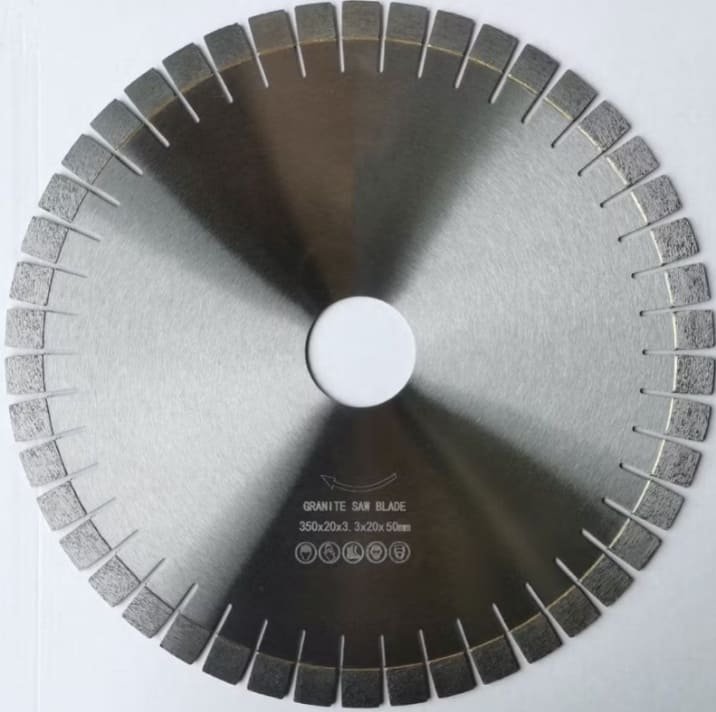
2. What blade is needed for cutting granite and what else to consider? Granite is a hard, abrasive igneous rock. Cutting it effectively requires a diamond blade specifically designed for hard granite or general-purpose hard stone. Key selection points:
- Diamond Quality & Bond: Opt for blades using high-strength diamonds and a harder, more wear-resistant bond to withstand granite’s abrasiveness. Look for “Granite,” “Hard Stone,” or “Premium” labels.
- Size: For handheld angle grinders, 4.5-inch (115mm) or larger (common sizes are 4.5″, 5″, 7″, 9″) blades are used. For tile saws or bridge saws, match the blade diameter to the machine’s specifications and the depth of cut required (common sizes from 10 inches up to 16 inches or more for slab cutting). Ensure the arbor hole matches your tool.
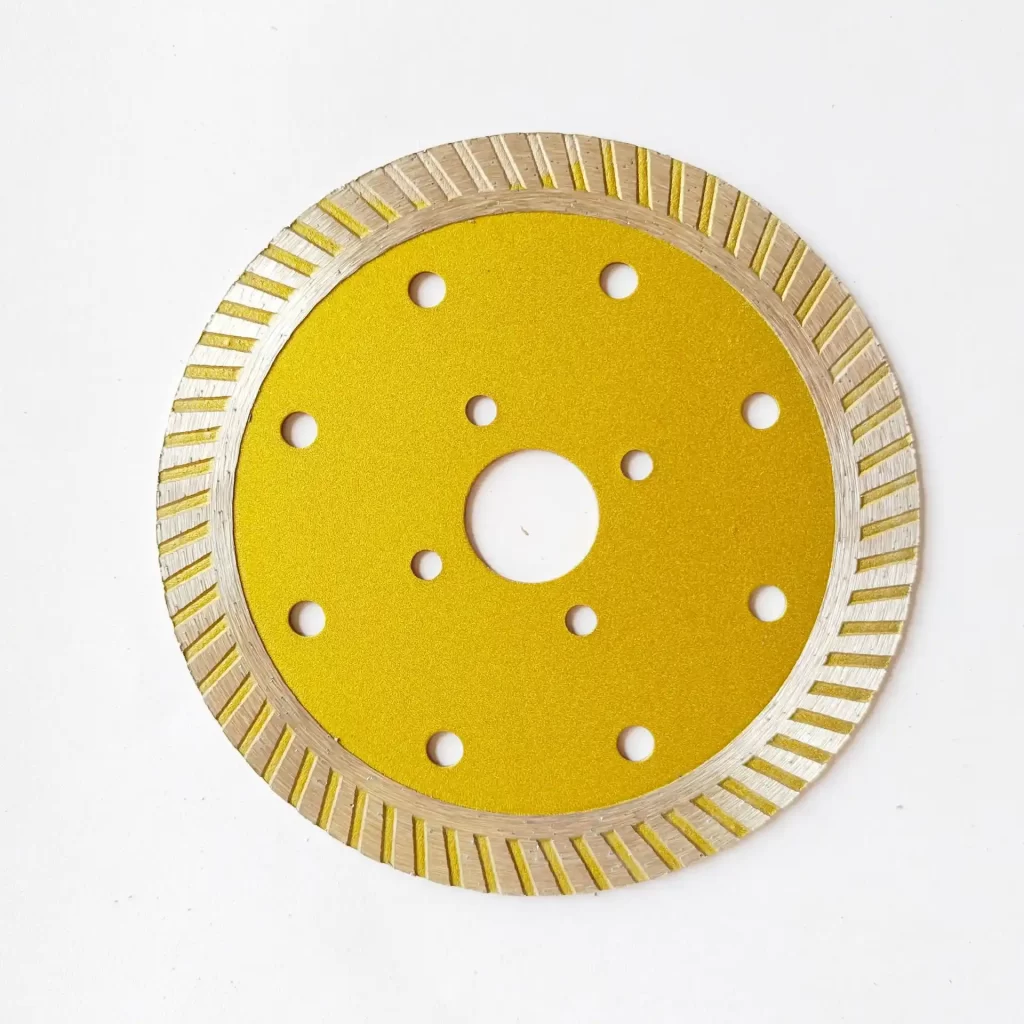
- Segment Design: Segmented rims or turbo-rim (serrated) blades are generally preferred for granite on angle grinders and saws. They provide faster cutting and better debris clearance than continuous rims, though the cut edge may be slightly rougher (often addressed by polishing afterward).
- Wet vs. Dry: Wet cutting is HIGHLY recommended for granite. It controls hazardous silica dust, cools the blade dramatically extending its life, and improves cut quality. Use a blade explicitly rated for wet cutting. If dry cutting is unavoidable (e.g., on-site with no water), use a specialized “dry cut” granite blade sparingly, make very short cuts, and allow extensive cooling time between cuts – expect significantly reduced blade life.
- Critical Considerations:
- Silica Dust Safety: Granite cutting generates respirable crystalline silica dust, a severe health hazard causing silicosis and lung cancer. ALWAYS use water suppression (wet cutting) AND wear a properly fitted N95/P2 respirator (or better, like a P100 half-mask) certified for silica dust, even when wet cutting. Work in well-ventilated areas. Never dry cut without extreme respiratory protection.
- Cutting Technique: Use steady, moderate pressure. Let the blade do the work; forcing it causes overheating and damage. Follow blade manufacturer recommendations for RPM and feed speed. Use guides for straight cuts.
- Cooling: Maintain a consistent water flow covering the blade’s cutting edge during the entire cut if wet cutting.
- PPE: Essential gear includes safety glasses/goggles, hearing protection, heavy-duty gloves, respirator, and sturdy footwear.
In conclusion, diamond blades are the indispensable tool for cutting stone, made possible by harnessing the hardest material on Earth. Their success depends not just on the diamonds themselves, but on the intricate engineering of the blade, the properties of the stone, and the skill and care of the operator. Understanding the factors influencing performance – from the quality of the diamond grit and the bond matrix to the blade design, operating parameters, and crucial safety measures like dust control and current limiting for thin blades – is key to achieving efficient, high-quality, and safe stone cutting operations.Whether using a standard blade or leveraging the material-saving advantages of thin-kerf technology, the diamond blade remains fundamental to transforming raw stone into functional and beautiful products.
What is better,carbide or diamond blade?Diamond Blade for Sale:

Related Post about diamond blade
Di
More Post:
Can a diamond blade break?